
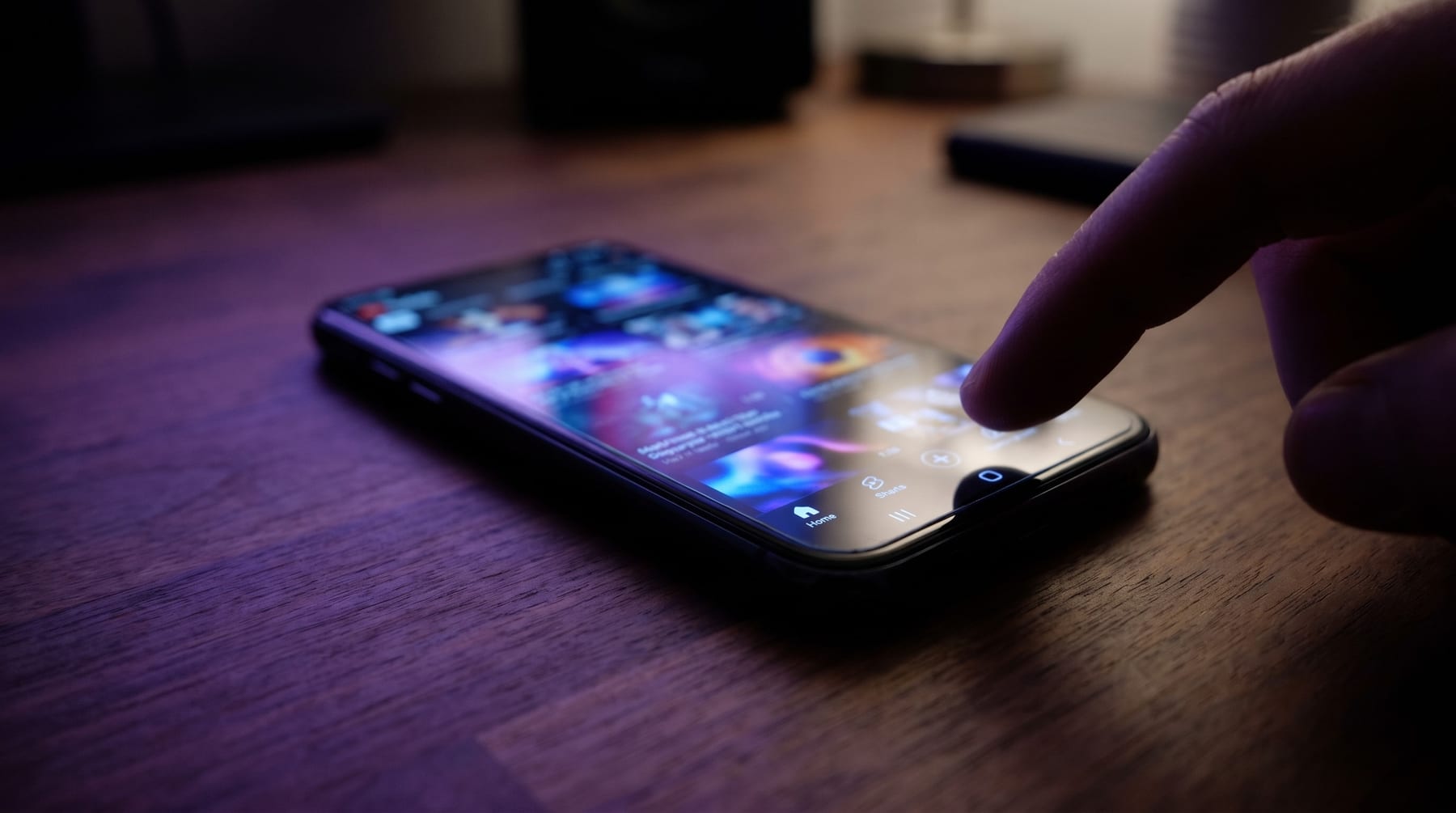
Picture this. On the subway home from work, you open the YouTube app. Your thumb moves out of habit to the bottom right of the screen, where the subscription list always was. But what your fingertip lands on is a different button. Your thumb pauses for a moment.
It’s a small change. Just one button moved. But for a long time, that button was the home where the promise called “subscribe” lived. When a home moves, the meaning of the promise shifts a little too.
Subscriptions Up, Sentences Forward
In a community announcement on October 22, 2026, YouTube said it was kicking off a series of updates to the Home screen. On the mobile app, the Subscriptions feed was renamed “Subs” and moved to the top bar of the Home tab. New dedicated feeds such as Live, Music, and Movies & TV joined the same row. The Movies & TV feed appears only to people with active paid subscriptions.
According to tech outlet 9to5Google, the Subscriptions tab had sat in the fourth position of the mobile app’s bottom bar since 2017 — nearly nine years in the same spot.
In the same announcement, YouTube also introduced custom feeds. Tap the “+” at the top of the Home screen, describe what you want to see in your own words, and a feed is built around that sentence. The example given in the announcement is “help me unwind after work with guided meditations under 10 minutes.” You can describe a topic, channels, or a vibe.
According to the YouTube Help Center, custom feeds work as follows.
- Number of feeds — Regular accounts can keep up to 3, and YouTube Premium members up to 8.
- Expiry — The prompt for a feed left unused for 30 days expires.
- Watch history — Videos watched in a custom feed are added to your regular watch history and may influence your main Home recommendations.
- Revenue — Videos watched in a custom feed count toward the creator’s watch time and revenue, just as they do in the Home feed.
- Availability — It is rolling out first to signed-in users aged 13 or older in the U.S. with English settings, and is not available on tablets.
Viewers in Korea won’t be using custom feeds today. Still, the direction is clear. Next to the place where viewers chose “whom to watch,” a place has opened up to say “what I need” in a sentence.
What Subscriber Counts Have Measured
In meetings about running a brand channel, the subscriber count often sits on the first line. “10,000 subscribers” sounds like 10,000 people waiting for the next video. But is that really so?
YouTube had already offered a clue to the answer. In a September 2021 post on the official YouTube blog, VP of Engineering Cristos Goodrow explained that recommendations drive a significant amount of overall viewership on YouTube, more than channel subscriptions or search. The same post describes the homepage as a mixture of personalized recommendations, subscriptions, and the latest news and information.
The same post also records how it began. Around 2008, when YouTube first started building its recommendation system, a single “Trending” page of the most-viewed videos was at the center, and most viewing reportedly came from searches or links shared off the platform. In 2012, YouTube began factoring watch time, not just clicks, into recommendations, and says views immediately dropped by 20%. YouTube accepted that number. It was a choice to look at how satisfied people were rather than how many times they clicked.
From search and links to subscriptions, from subscriptions to recommendations, and now from recommendations to sentences viewers write themselves. The path by which viewers meet videos has gradually moved toward the viewer.
So this change is less a sudden turn than a long-running trend showing up in the screen layout. A subscription is a promise a viewer makes to a channel. But that promise did not always turn into viewing. Viewers have long tapped the video that fits their current mood before the new upload from a channel they subscribe to.
Picture this. Someone subscribed to a brand channel six months ago to join a new-product event. Their subscription list now holds dozens of channels. They don’t dislike the brand. They simply don’t remember it. Their cell in the subscriber count stays filled.
A subscriber count is “the number of people who were moved once.” It is not “the number of people waiting now.” The gap between the two differs by channel, and a single cell in a report cannot show it.

People Come for a Need, Not a Name
In the custom feed prompt box, people write situations instead of channel names: “10-minute morning stretches,” “simple meals to cook alone on the weekend.” When viewers describe their day in a sentence, YouTube finds videos that fit it.
The question a brand channel faces in this structure is simple: which sentence of someone’s is our channel the answer to? “News from Brand ○○” is not a sentence viewers type into a prompt box. “What to pack for your first camping trip” is.
There is a shadow, of course. A feed driven by sentences stays faithful to viewers’ needs, and in doing so can blur channel names. More people may watch a good video and not remember which channel it came from. And if a brand makes only videos that answer needs, the voice it meant to protect risks fading away. It is the same reason writing aimed at search keywords tends to look alike.
One rule of custom feeds is worth noting. A feed left unused for 30 days disappears. Even a sentence a viewer once wrote does not last forever. When needs change, the sentence changes, and when the sentence changes, so do the channels that appear in that feed. It is not a number you stockpile like a subscription won once, but a place you have to be called to again each time.
So the question splits in two. One is “what need will we answer?” The other is “are we answering it in our own way?” The first gets a video discovered; the second gets it remembered after it is found.
This isn’t just about YouTube. Think of a favorite local restaurant. People don’t go back because they like its name. They go because the soup they crave on a rainy day is there. The name stays after those experiences pile up.

What Remains Instead of the Number
The Subscriptions tab hasn’t disappeared. It has only moved to the top of Home, and videos from subscribed channels still gather there. Nor has the subscriber count lost its meaning. But it is getting harder to describe a channel’s health with that number alone.
When reviewing a channel, here are questions worth writing down next to the subscriber count.
- The sentence of need — Which sentence that a viewer might type into the prompt box do our videos answer?
- Reasons to return — When do subscribers come back for a new video, and what do they need on that day?
- Our own way — Among other videos answering the same need, is there a scene or a tone of voice that makes ours recognizable?
Thumbs will soon get used to the new spot. People relearn where a button is quickly. What lasts is whatever they met by pressing that button.
Studio AVIO works as one team, from planning and shooting to post-production and channel distribution.
Even on a screen where the subscribe button is out of sight, which sentence in someone’s day is our channel being called by?
References
- YouTube Community - New ways to explore YouTube from your Home page (Oct 22, 2026 announcement)
- YouTube Help Center - Create & manage your custom feeds on YouTube Home
- Official YouTube Blog - On YouTube’s recommendation system (2021.9.15)
- 9to5Google - YouTube removing ‘Subscriptions’ bottom bar tab on Android, iOS after nearly a decade (2026.10.22)
If you'd like to plan everything from concept to distribution together, like in this post.
Start a Project