

For Korean brands knocking on the door of the US market, local creator partnerships and customer reviews are the first tools they reach for. Sending products, receiving videos and building up reviews on product pages looks much the same as in Korea. But the US has federal rules covering this entire process, and running it exactly as you would in Korea can leave gaps.
The benchmarks are two rules from the US Federal Trade Commission (FTC, the US federal agency responsible for consumer protection and fair competition). One is the Endorsement Guides, revised in June 2023; the other is the Consumer Reviews and Testimonials Rule, which took effect on October 21, 2024. Here are five things Korean brand managers preparing to enter the US should know.
1. US rules can apply even to videos posted from Korea
It is easy to think, “We are a Korean company and we post from Korea, so it doesn’t apply to us.” The FTC’s guide for influencers states that even posts made from abroad are subject to US law if it is reasonably foreseeable that they will affect US consumers. The FTC’s FAQ gives the same explanation using the example of a foreign creator’s sponsored videos about products sold in the US, adding that other countries have similar rules that should be checked as well.
In other words, if you promote products sold on Amazon US or your own online store with English videos, it is safer to prepare to US standards whether the shoot is in Seoul or the creator is Korean. Noting in the plan early on which country’s audience each asset targets makes it clear which country’s rules to check.
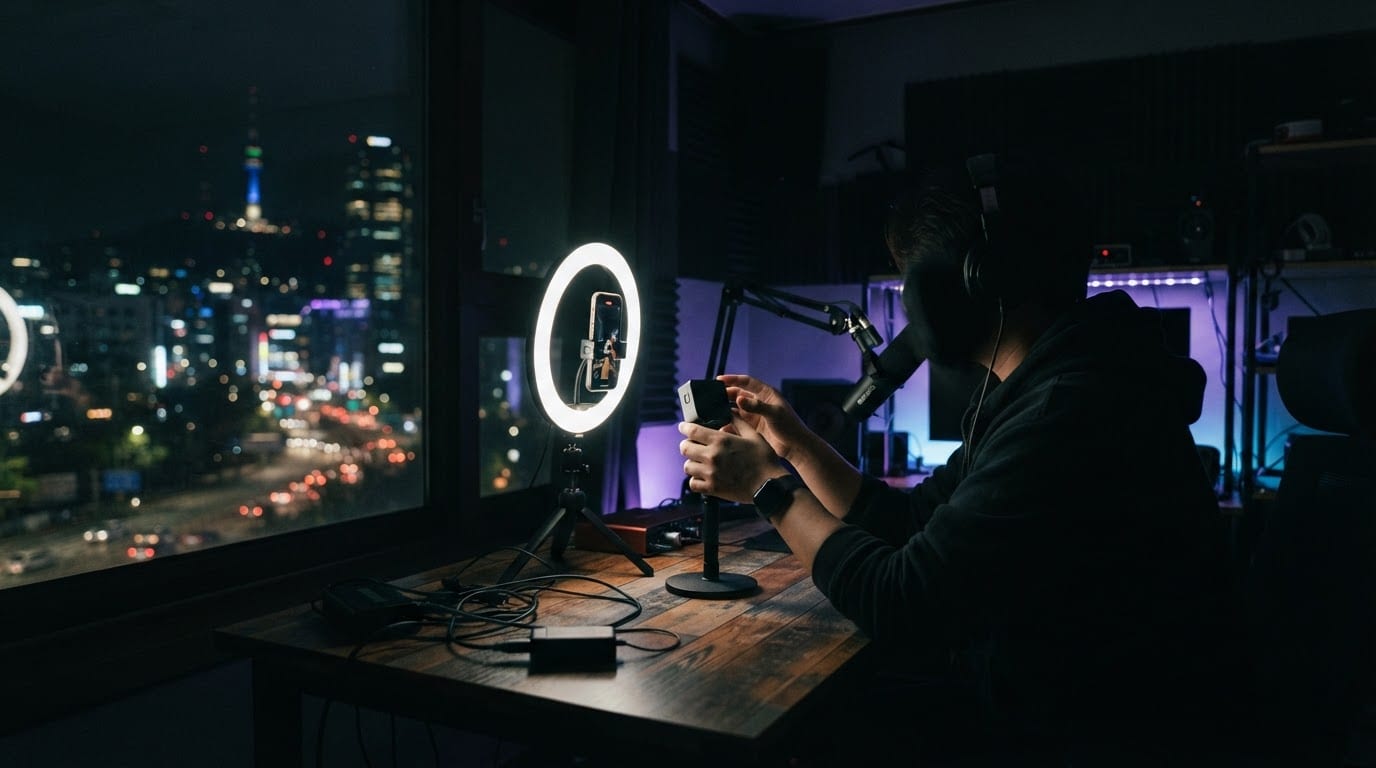
2. A “sponsorship” is broader than money
The FTC requires disclosure of any material connection between a brand and the person endorsing it. This covers not only money but also free or discounted products, services and anything else of value received, as well as family and employment relationships. In other words, seeding videos where you send only a product and pay no fee are also subject to disclosure.
The 2023 revision also broadened what counts as an “endorsement.” According to the FTC, social media tags, virtual influencers created with AI and similar tools, and manipulated fake reviews can all qualify. The FAQ explains that even light actions such as tags, likes and pins can be endorsements. When employees or executives at the Korean headquarters introduce company products on personal accounts, they must also disclose the employment relationship.
| Situation | Is disclosure required? | Practical tip |
|---|---|---|
| Paid ad contract video | Required | Specify the disclosure method and placement in the contract |
| Seeding / unboxing with product only | Required | Include a disclosure request in the shipping note |
| Employee or executive posts on personal accounts | Required | Add employment-relationship disclosure to the internal social media guide |
| Voluntary reviews from customers who bought the product | Not required if there is no connection | Once you give a reward, disclosure is required |
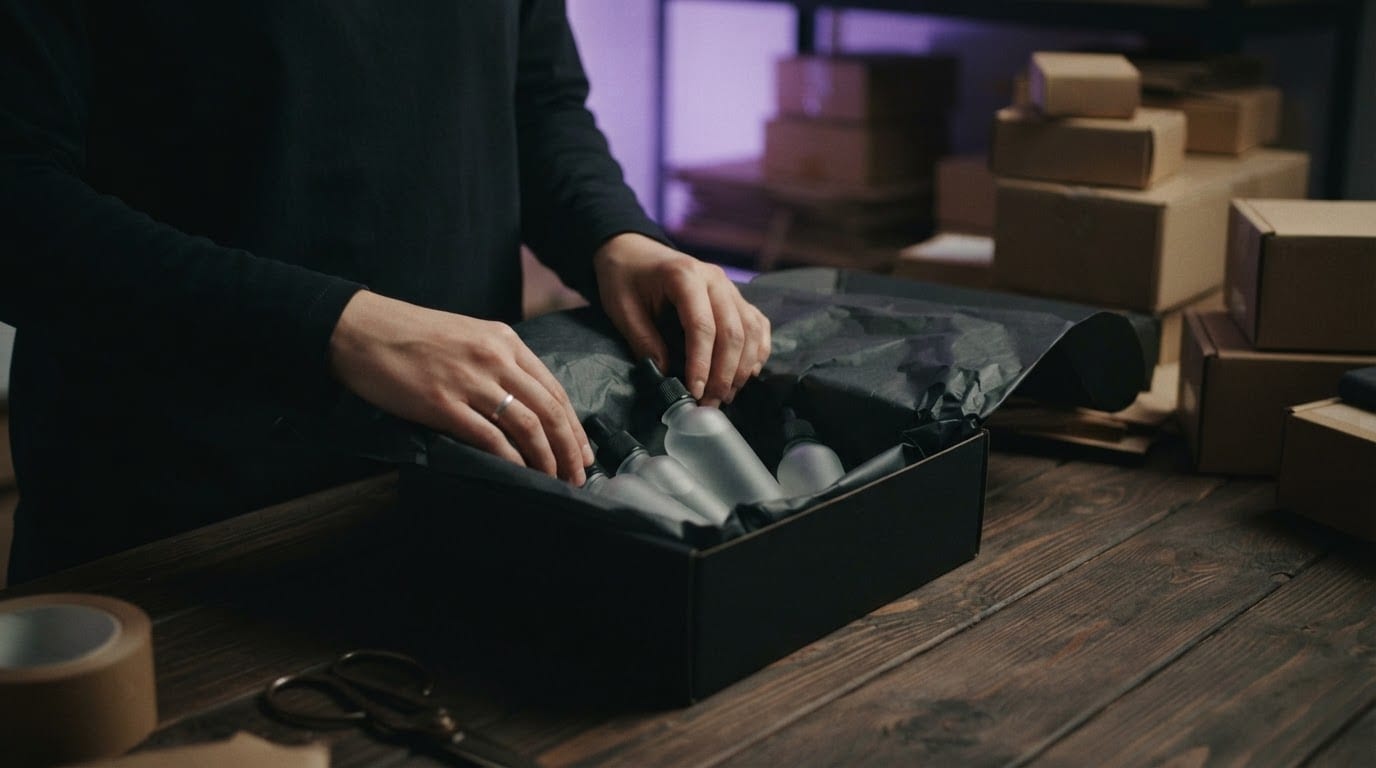
3. Disclose “in the video, in the same language, from the start”
There is no required wording, but the disclosure must be clear and placed where it is hard to miss. Here are the standards from the FTC guide and FAQ, organized from a video production perspective.
- Put it in the video — Writing it only in the upload description is not enough. Disclose it in the video itself through on-screen text, voice, or both. Since some viewers watch with the sound off, combining text and voice is more noticeable.
- Put it up front — Placing it at the start of the video, before the endorsement, works best, and repeating it is even better. The end of a video, behind a “more” link, or among a cluster of hashtags are considered easy-to-miss spots.
- In the same language — The disclosure must be in the same language as the endorsement: English for English videos, Spanish for Spanish videos.
- Use clear words — Use unambiguous words such as “ad,” “advertisement” or “sponsored,” and avoid abbreviations or vague terms such as “sp,” “spon” or “collab.”
- Repeat it in live streams — Because viewers join live streams midway, repeat the disclosure throughout or keep it on screen, and add it to the description as well.
- Don’t rely on platform tools alone — The FTC explains that a platform’s paid-promotion label may not be sufficient on its own. Even when using the feature, add your own disclosure.
Take particular care when re-editing videos received in Korea for the US. When the Korean “includes paid advertising” caption is removed and only new English subtitles are added, the disclosure can drop out. Adding a separate disclosure item to your localization editing checklist is the simplest safeguard.

4. Brands are responsible for what creators say
The FTC FAQ explains that advertisers are responsible for what their creator networks say. They should have reasonable training and monitoring programs that teach what can be said and how to disclose, periodically check posts and act on problems. Handing this work to a local agency does not remove the advertiser’s responsibility, and pre-approval of paid posts is recommended.
Efficacy claims follow the same principle. The advertiser must have support for objective claims about the product and must tell creators what they can and cannot say. Creators, in turn, must not describe experience with a product they haven’t tried or invent claims the advertiser cannot support (such as unsupported health benefits). Korean brands will find it easier to respond if they prepare the following two documents in English.
- Creator brief — Put allowed claims and their support, prohibited claims, disclosure wording and placement, and the pre-review schedule on a single page.
- Monitoring log — Record the dates you checked each post for disclosure and wording, along with any correction requests.
5. Practices to avoid when collecting reviews
The review rule that took effect on October 21, 2024 (16 CFR Part 465) bans specific practices involving reviews and testimonials and lets the FTC seek civil penalties from businesses that knowingly violate it. On December 22, 2025, the FTC sent warning letters to 10 companies over possible violations of the rule, noting that penalties of up to $53,088 per violation are possible. The main prohibited practices identified by the FTC are as follows.
| Prohibited practice | Description | What Korean brands should check |
|---|---|---|
| Fake reviews | Creating, buying or selling reviews from people who don’t exist (including AI-generated) or who have no real experience | Whether you use review services |
| Sentiment-conditioned incentives | Offering compensation or perks conditioned on a positive (or negative) review | Promo copy like “discount for a 5-star review” |
| Undisclosed insider reviews | Insider reviews (e.g., from officers or managers) that don’t disclose the connection | Whether employees or their families post reviews |
| Review suppression | Removing negative reviews through baseless legal threats or intimidation | Negative-review response manual |
| Fake influence indicators | Buying or selling fake followers or views to inflate influence | Whether you use account-growth services |
Promotions common in Korea, such as “points for posting a photo review,” also need to be redesigned for the US. According to the FAQ, the problem is less giving a perk in exchange for a review than making it conditional on a positive review. The basic approach is to give the perk regardless of whether the review is positive or negative, and to tell reviewers in advance to disclose that they received it.
US influencer and review marketing checklist
- For each asset, have you noted the target country and audience in the plan, and applied FTC standards if it targets US viewers?
- Are you managing not only paid contracts but also seeding and employee posts as subject to disclosure?
- Is the disclosure in the video, near the start and in the same language? Is it repeated during live streams?
- Have you confirmed that the disclosure wasn’t dropped after localization re-editing?
- Does your creator brief set out allowed and prohibited claims and the support for efficacy claims?
- Are you keeping records of post-publication monitoring and correction requests?
- Does your review promotion avoid conditioning rewards on positive reviews, and does it ask reviewers to disclose the perk?
- Have you had a US legal professional review state laws and industry-specific regulations?
STUDIO AVIO handles film and photo production, post-production, influencer marketing and ad campaigns with one team in Seoul. If you are shooting new assets for overseas audiences or re-editing existing videos with subtitles in another language, and want to align disclosure wording and subtitle layout from the planning stage, feel free to get in touch.
References
- FTC - Federal Trade Commission Announces Updated Advertising Guides to Combat Deceptive Reviews and Endorsements (2023.06.29)
- FTC - Disclosures 101 for Social Media Influencers
- FTC - FTC's Endorsement Guides: What People Are Asking
- FTC - Federal Trade Commission Announces Final Rule Banning Fake Reviews and Testimonials (2024.08.14)
- Federal Register - Trade Regulation Rule on the Use of Consumer Reviews and Testimonials (2024.08.22)
- FTC Business Blog - A warning letter (or ten): Businesses, comply with the FTC's Consumer Review Rule (2025.12.22)
If you'd like to plan everything from concept to distribution together, like in this post.
Start a Project