
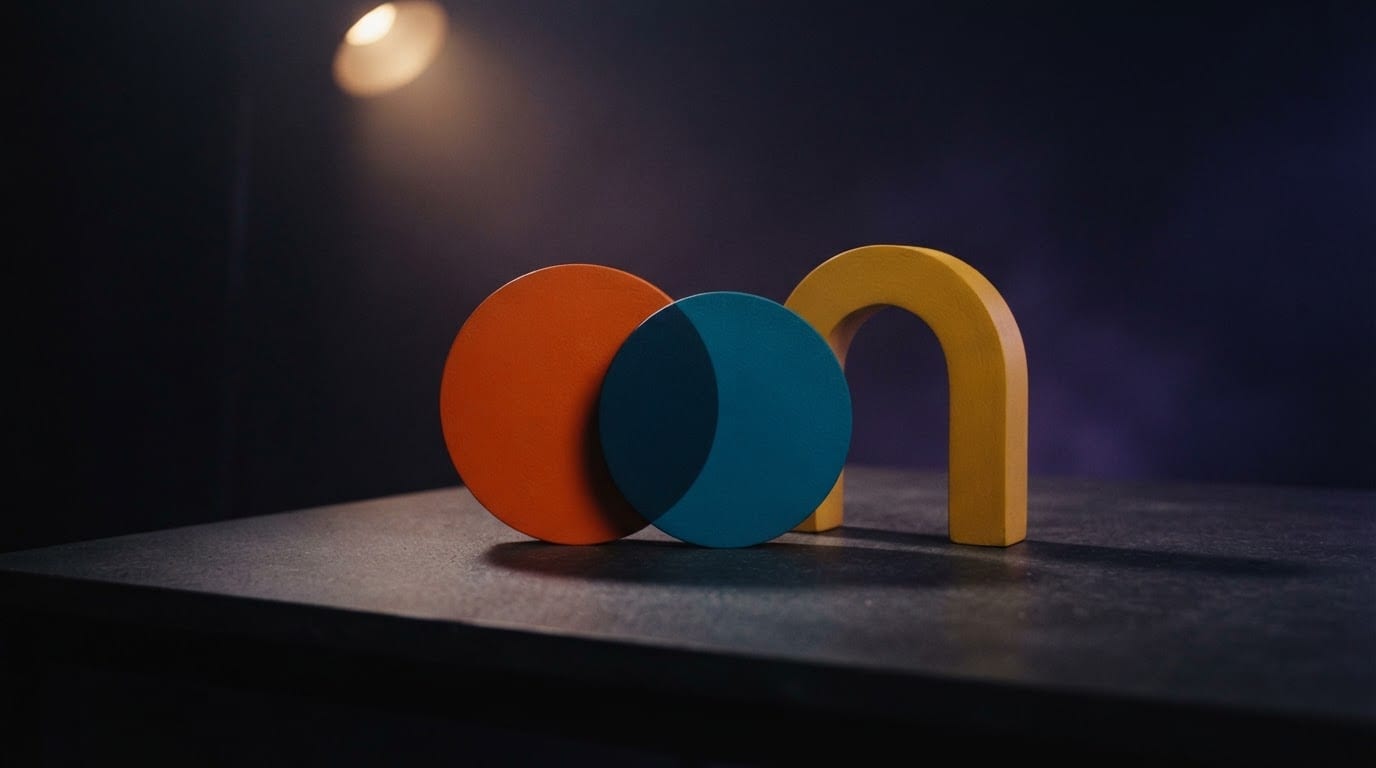
Sometimes a carefully crafted ad becomes a talking point, yet people ask, "What brand was that ad for again?" The video was memorable, but the brand wasn't. Before remaking the creative, there's something to look at first: the cues that make consumers instantly think, "Ah, that brand"—in other words, Distinctive Brand Assets.
Distinctive brand assets are elements that bring a brand to mind without saying its name. Professor Jenni Romaniuk of Australia's Ehrenberg-Bass Institute systematized the concept and how to assess it in works such as her book "Building Distinctive Brand Assets." In this post, we outline in practical order how to choose, assess, and grow assets in your campaigns.
1. The logo isn't the only brand asset
When people think of brand assets, the logo comes to mind first, but the cues that actually stick in consumers' memories are far more varied. In an ad environment where things flash by in an instant, a brand is easier to recognize when several assets work together rather than a logo alone.
| Asset type | Example | Where it works well |
|---|---|---|
| Color | The brand's signature color combination | Stores · packaging · ad opening scenes |
| Shapes · symbols | Symbols, distinctive packaging shapes | Small screens · long-distance exposure |
| Sound | Sonic logos, short melodies, voices | Videos watched with sound on · payment moments |
| Characters · people | Mascots, recurring models | Series content |
| Words · phrases | Taglines, recurring turns of phrase | Ad end frames · campaign slogans |
| Style | Shooting tone, proprietary typeface, framing style | Across the social feed |
What matters is not stopping at a list of "what we have." You need to examine which of these are actually linked to your brand in consumers' minds.

2. Two conditions of a good asset: is it widely known, and is it ours alone?
Professor Romaniuk's framework looks at an asset's strength through two criteria. Fame is how many category buyers think of your brand when they see the element, and Uniqueness is whether the element brings only your brand to mind rather than a competitor's. Placing assets on these two criteria as horizontal and vertical axes produces the "Distinctive Asset Grid."
Assets that score high on both criteria are strong enough to stand in for the brand name, so they should be used consistently and actively. Assets that are unique but not yet well known are ones to grow through more exposure. In practice, sorting out the remaining cases as well speeds up decisions.
| Asset status | Meaning | Practical response (example) |
|---|---|---|
| High fame · high uniqueness | Brings the brand to mind even without the name | Use consistently across every touchpoint and don't change it lightly |
| Low fame · high uniqueness | Ours alone, but not yet well known | Repeat in ads and content alongside the brand name |
| High fame · low uniqueness | Familiar, but also brings competitors to mind | Don't use alone; pair with a distinctive asset |
| Both low | Barely linked yet | Decide whether to grow or retire it, and reduce the number of assets |

3. Check consumers' memories, not your own instincts
Brand managers see their own brand's logo and colors every day, so it's easy to assume consumers know them just as well. Research by Ehrenberg-Bass researchers (Ruby Brus et al.), featured in Marketing Week, shows how far off this instinct can be. When more than 400 brand elements across multiple categories were measured through consumer research and compared with marketers' judgments, marketers tended to rate assets' fame too high and their uniqueness too low.
The researchers attributed this to marketers being overly familiar with the elements of their own and competing brands. Because they're so familiar with their own, they assume consumers know them too, and because they know competitors' designs so well, they become sensitive to even small similarities. They therefore recommend basing asset decisions on consumer research, and note that when research is difficult, judgments made by several people together were more accurate than those made by one.
4. Case study: Mastercard, which removed its name and added the senses
Mastercard is a case that clearly shows how distinctive assets can be grown step by step. According to Fortune, Mastercard moved its wordmark from inside the circles to below them in 2016, and at CES on January 7, 2019, announced that in some contexts it would use only the overlapping red and yellow circles symbol without its name. The company said it had conducted more than 20 months of global consumer research, and that the basis for the decision was that over 80% of people spontaneously recognized the symbol without the name.
A month later, on February 8, 2019, it unveiled its sonic brand. According to the official announcement, the aim was for consumers to recognize Mastercard by the same melody wherever they encounter it, in physical, digital, and voice environments. According to reports, it is also used for the sound at the moment a payment is approved and in voice assistant interactions, and multiple versions were created with different instruments and tempos to suit markets and situations.
- Research first, changes later — The decision to drop the name was made only after confirming data showing people recognized the symbol.
- Don't change everything at once — Moving the wordmark, using the symbol alone, and adding sound were rolled out one after another over several years.
- Same asset, different expressions — By keeping the core melody while creating versions for different situations, it achieved both consistency and variation.

5. Case study: McDonald's UK, which turned its asset into the story
Going a step beyond protecting assets, you can also make an asset the theme of a campaign. In January 2023, McDonald's UK launched the "Raise Your Arches" campaign with Leo Burnett UK. The premise was that silently raising both eyebrows at a friend or colleague is a signal for "Want to go to McDonald's?", and the raised eyebrows were shown overlapping the Golden Arches.
According to Marketing Week, the first ad was the first McDonald's ad to feature neither a restaurant nor food, and it scored 98 on System1's brand recognition score, an "exceptional" level. The brand came through clearly without showing the product because the story was carried by already well-established distinctive assets (the arch shape and the red and yellow colors). The campaign also extended to Snapchat and Instagram lenses that raise your eyebrows into an arch shape.
Strong assets aren't just something to protect. By layering a new story onto shapes, colors, and sounds consumers already know, you can create a memorable campaign without shouting the brand name.
Key takeaways: distinctive brand asset checklist
- Have you listed your brand's candidate assets (color, shape, sound, character, phrases, style)?
- Did you assess each asset by the two criteria of fame and uniqueness?
- Is that judgment based on consumer response rather than internal opinion?
- Are your key assets clearly visible (or audible) in the first and last scenes of the ad?
- Rather than adding new elements with every campaign, are you focusing on a few assets to grow?
- Before changing or reducing an asset, did you check that people still recognize the brand?
Distinctive assets are built not by a single rebrand but by consistently repeating the same cues across countless pieces of content. Studio AVIO handles everything from brand strategy and campaign planning to video and photo production in one team, so we make sure the assets chosen at the planning stage carry through to the set and the final deliverables.
References
- Marketing Week - Marketers’ judgement of brand asset strength ‘rarely accurate’, study finds
- Oxford University Press - Building Distinctive Brand Assets (Jenni Romaniuk)
- Mastercard - Mastercard evolves its brand mark by dropping its name (2019.01)
- Fortune - Mastercard drops its name from company logo
- Mastercard Investor Relations - Sound On: Mastercard Debuts Sonic Brand (2019.02)
- The Drum - Fresh from revamping its brand, Mastercard unveils sonic logo
- Marketing Week - McDonald’s releases Christmas instalment of ‘Raise Your Arches’ platform
- Social Samosa - The latest McDonald’s UK campaign raises eyebrows
If you'd like to plan everything from concept to distribution together, like in this post.
Start a Project